STIFTUNG WARENTEST
Mode ist nur selten fair
Viele Modefirmen schmücken sich mit einer "grünen" Linie. Doch nur die wenigsten sorgen für Umweltstandards und faire Arbeitsbedingungen, belegt die Stiftung Warentest.
© Oliver Berg/dpa
H&M wirbt verstärkt mit seiner "grünen" Linie. Dennoch verweigerte der Konzern den Testern der Stiftung Warentest den Einblick in seine Produktionskette
Wenn ein T-Shirt für 3 Euro über den Ladentisch geht, kann es dann überhaupt fair und umweltfreundlich produziert worden sein? Dieser Frage ist die Stiftung Warentest in ihrer August-Ausgabe nachgegangen und hat 20 Anbieter klassischer T-Shirts einem CSR-Test unterzogen. CSR steht fürCorporate Social Responsibility, das freiwillige Engagement von Firmen für die Mitarbeiter und die Umwelt. Die Tester bekamen Zutritt zu 14 Nähereien und 9 Färbereien in 10 Ländern. Dort überprüften sie die Umweltfreundlichkeit des Materials sowie die Löhne und Arbeitsbedingungen. Außerdem bewertete die Stiftung Warentest die Unternehmenspolitik, Verbraucherinformation und Transparenz der einzelnen Unternehmen.
Das Ergebnis ist desillusionierend: Obwohl sich seit einiger Zeit viele Firmen ökologisches Engagement und fairen Handel auf die Fahnen schreiben, verwirklicht in der Realität fast keine diese Vorsätze. Nur die Natur- und Ökomodefirma hessnatur konnte den Anbau und die Weiterverarbeitung der Baumwolle – in ihrem Fall Biobaumwolle aus Burkina Faso – einwandfrei nachverfolgen. Außerdem engagiert sich das Unternehmen sehr für seine Mitarbeiter und den Umweltschutz. Weitere fünf Anbieter zeigten zumindest positive Ansätze, so etwa C&A, dessen zwei indische Fertigungsstätten sich durch eine weit entwickelte Sozial- und Umweltpolitik auszeichnen.
Die Modemarken Mexx, NKD und zero verweigerten hingegen vollkommen die Auskunft. Das gilt auch für H&M, obwohl der schwedische Konzern seit Jahren seine "grüne" Linie in den Fokus rückt.
Auch andere Anbieter, die sich explizit als Ökomode-Labels vermarkten, konnten bei genauer Nachfrage der Tester nicht bestehen. Das junge Modelabel armedangels aus Köln – das einzige mit Fairtrade-Siegel im Test – behauptete auf seiner Webseite etwa, engen Kontakt zu den Baumwollbauern oder der Färberei in Portugal zu pflegen. Bei Nachforschungen der Tester stellte sich jedoch heraus, dass keiner der Betreffenden armedangels kannte. Außerdem betont das Unternehmen, dass von der Baumwollernte bis zum Druck alle Arbeiter genug verdienen würden, um ihren Familien ein Leben jenseits der Armutsgrenze zu ermöglichen. Die Tester ermittelten jedoch, dass armedangels zwar faire Preise für die Baumwolle zahlte, nicht aber für deren Verarbeitung.
In vielen Fällen ergaben die Prüfung der Unterlagen und Gespräche vor Ort, dass die Fabrikarbeiter ihre Lebenskosten mit ihrem Lohn kaum decken können. Deutlich mehr als den Mindestlohn zahlen nur wenige Häuser, etwa hessnatur in Litauen. Trigema bezahlt seine deutschen Angestellten über Tarif. Panda tut das gleiche für die Mitarbeiter in der deutschen Färberei. Die Konzerne Ernsting’s Family und Peek&Cloppenburg lassen in Bangladesch in anständiger Weise produzieren und zahlen neben den kargen Mindestlöhnen zumindest extra Boni.
Auch die ökologischen Kriterien waren in vielen Fällen unklar. Der Otto-Versand konnte nach Angaben der Stiftung Warentest nicht nachweisen, dass sein T-Shirt tatsächlich aus Bio-Baumwolle besteht – und das, obwohl für jede Stufe vom Anbau bis zum Händler Zertifikate vorliegen müssten. Auch bei weiteren Bio-Baumwoll-T-Shirts konnten die Tester nicht bestätigen, ob beim Anbau Biokriterien eingehalten wurden. In einigen Betrieben konnte man zudem nicht ausschließen, ob nicht konventionelle Baumwolle zugemischt wurde.
Der konventionelle Baumwollanbau verbraucht 10 Prozent aller weltweit eingesetzten Pestizide. Nach Angaben der Weltgesundheitsorganisation WHO sterben jährlich Tausende Feldarbeiter an den Folgen. Der Bioanbau verzichtet hingegen auf chemische Pflanzenschutzmittel.
Der Bundesverband der Verbraucherzentrale fordert nun eine gesetzliche Informationspflicht von Unternehmen zu den Umwelt- und Sozialstandards ihrer Produkte. "Die Politik muss dafür sorgen, dass dieser Etikettenschwindel ein Ende hat“, forderte der Vorstand Gerd Billen. Dafür sei ein entsprechender Auskunftsanspruch im Verbraucherinformationsgesetz zu verankern. Darüber hinaus fordert der Verband verbindliche Umwelt- und Sozialstandards für Baumwolle, die regelmäßig von unabhängiger Seite kontrolliert werden sollen.
Donnerstag, 29. Juli 2010

Mittwoch, 14. Juli 2010
Schoenen Gruss und Aufwiedersehen...
So, heute mach ich einen Schnitt mit diesem Blog, in dem es um Baumwolle und Indien gehen sollte. Ich denke mal, so ganz habe ich das Thema nicht verfehlt. Fuer alle, die im deutschsprachigen Raum mit Textilien zu tun haben und damit auch ihr Geld verdienen, koennten vor allem die Beitraege von Februar bis Mai 2010, den ein oder anderen hilfreichen Ansatz und Information beinhalten. Ich habe in diesen Monaten versucht, einen einfachen, klaren Ueberblick darueber zu geben, was alle notwendig ist, um so ein simples T-Shirt herzustellen. Ich war selber vor Ort und habe bei dem indischen Produzenten Prem Group einen weitgehends offenen und ehrlichen Einblick in die verschiedenen Arbeitsprozesse erhalten. Prem geheort in Indien sicher zu den Produzenten, die nicht nur einen guten Ruf haben, sondern sich diesen auch verdient haben. Meine Zuversicht, dass sich diese Einstellung auch bei den meisten anderen textilverarbeitenden Betrieben etablieren wird, ist bescheiden. Erst gestern hat der UN Umweltchef, Achim Steiener, in einem Interview mit der SZ erklaert: „...die Umweltschäden, die allein die 3000 größten Unternehmen der Welt durch den Missbrauch natürlicher Ressourcen, durch Verschmutzung von Luft oder Gewässern sowie das Aussterben von Arten verantworten, betraegt 1,7 Billionen Euro. "Viele Volkswirtschaften sind noch immer blind für den enormen Einfluss der Artenvielfalt von Tieren, Pflanzen und anderen Lebensformen und ihre Rolle für die Funktion des Ökosystems", kritisierte Steiner. Das betreffe Wälder und Trinkwasservorräte ebenso wie den Boden, die Ozeane und die Atmosphäre. So gingen jedes Jahr zwölf Millionen Hektar landwirtschaftlicher Fläche verloren.... Den Grund für die weit verbreitete Ignoranz der Konzerne sehen die Vereinten Nationen in mangelnden Folgen für die Bilanz der Unternehmen: Die Nutzung des Ökosystems habe in vielen Bereichen keinen Marktpreis, sagt Steiner. "Kosten für Umweltschäden tragen Versicherer, die Bevölkerung und Steuerzahler." Die Vereinten Nationen fordern Regierungen weltweit deshalb zum Umdenken auf. In internationalen Großkonzernen löst diese Bedrohung der UN-Studie zufolge aber kaum Besorgnis aus, schreibt die SZ. Nur zwei der hundert größten Unternehmen haben sich demnach den Erhalt der Ökosysteme als strategisches Ziel festgeschrieben. Von 1100 internationalen Top-Managern fürchtet nur jeder Vierte, Artensterben und der Verlust ganzer Ökosysteme könnten das eigene Geschäft beeinträchtigen. „In vielen Konzernen gilt noch immer die Devise: Natürliche Ressourcen sind unerschöpflich. Dabei müssen wir längst schmerzhaft spüren, dass das nicht mehr stimmt“, sagt UNEP-Chef Steiner.
Ein wenig Hoffung macht da eigentlich nur, dass der UN-Studie zufolge vor allem in Entwicklungs- und Schwellenländern das Bewusstsein für die wirtschaftlichen Folgen von Artensterben und Umweltverschmutzung waechst. Während dies 50 Prozent der Konzernchefs in Lateinamerika und 45 Prozent der CEOs in Afrika als Gefahr für ihr Geschäft betrachten, sind es in Europa weniger als 20 Prozent.
Dagegen legen Konsumenten den Vereinten Nationen zufolge weltweit mehr Wert auf ökologische Produktion. 80 Prozent wollen bei Verstößen gegen ethische Regeln mit einem Boykott reagieren.
Wer auch immer diese 80% sein moegen, ich wuensche mir, dass ein Teil dieser Menschen dem auch Nachdruck verleiht und sich positioniert. Ich fuer meinen Teil habe das getan und werde das auch weiterhin tun. Leider fehlt in diesem Blog ueber Baumwolle ein ganz entscheidender Teil, der Anbau der Baumwolle. Ich habe es in meiner kurzen Zeit bei Switcher nicht realisieren koennen, die Baumwollanbaugebiete zu besuchen und darueber zu berichten. Vielleicht ergibt sich diese Gelegenheit ein anderes Mal...ich bleibe da dran.
Zum Abschluss noch eine kleine „Fotosafari“ von dem Besuch in Tirupur, der mir am meisten bedeutet hat. ...Allen Lesern und Leserinnen dieses Blogs wuensche ich Love and Peace oder wie ich in Hindi sagen wuerde Khao, Pio Maschaa karo!
Visiting the school and mobile school projects from Prem and Switcher. And finally, inaugurate a new mobile school bus supported by "Die Toten Hosen".
Location: Tirupur - Tamil Nadu 2010

Arrival in Tirupur....with...Das Auto...can't say it's ...Vorsprung durch Technik...

guess, that this decoration was not because of my welcome for...

...arriving at Switcher Prem School...

...I see, that's our welcome decoration and...

..our welcome brass band...

...with the little drummer boys...

...and the Dizzy Gillespies...

...the kids are alright...

...and the teacher looks even better...as far as I'm concerned...

...english lesson number one...

...and two...

... IT course for a bright future...

...and a windie future as well...

...kehle khele...

...a mobile school bus is comming...

...picking up kids from the poor part of the suburbia...

...before the school starts we have a rest for a...

...dance a...

...meal and a...

...drink and...
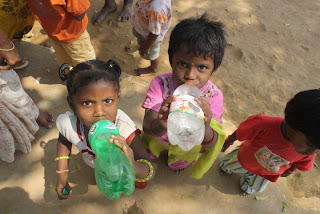
...another drink and...

...oh aehm...OK...lets start...

...upside down reading...

...studie of a stranger who...

...tells something about Ossy Osbourne and...

...is impressed about the result, so that...

...he can distribute the best marks for all the kids...

...what to say? A responsible cut for a man but the opening ceronomy of new Mobile School Bus is done...well done Mr. PeteR...but let...

...the kids out and...

...some more and...

...I enjoyed an amazing day with amazing children and collegues and...

...we all were screaming loud..."Bahoot bahoot dhanyawat Die Toten Hosen se"...

..and I say: "es gibt tausend gute Gruende auf diese Band stolz zu sein und gerade fallen mir...verdammt viele davon ein...

...thank you and good bye to Prem and Tirupur...but what about DAS AUTO ?
Ein wenig Hoffung macht da eigentlich nur, dass der UN-Studie zufolge vor allem in Entwicklungs- und Schwellenländern das Bewusstsein für die wirtschaftlichen Folgen von Artensterben und Umweltverschmutzung waechst. Während dies 50 Prozent der Konzernchefs in Lateinamerika und 45 Prozent der CEOs in Afrika als Gefahr für ihr Geschäft betrachten, sind es in Europa weniger als 20 Prozent.
Dagegen legen Konsumenten den Vereinten Nationen zufolge weltweit mehr Wert auf ökologische Produktion. 80 Prozent wollen bei Verstößen gegen ethische Regeln mit einem Boykott reagieren.
Wer auch immer diese 80% sein moegen, ich wuensche mir, dass ein Teil dieser Menschen dem auch Nachdruck verleiht und sich positioniert. Ich fuer meinen Teil habe das getan und werde das auch weiterhin tun. Leider fehlt in diesem Blog ueber Baumwolle ein ganz entscheidender Teil, der Anbau der Baumwolle. Ich habe es in meiner kurzen Zeit bei Switcher nicht realisieren koennen, die Baumwollanbaugebiete zu besuchen und darueber zu berichten. Vielleicht ergibt sich diese Gelegenheit ein anderes Mal...ich bleibe da dran.
Zum Abschluss noch eine kleine „Fotosafari“ von dem Besuch in Tirupur, der mir am meisten bedeutet hat. ...Allen Lesern und Leserinnen dieses Blogs wuensche ich Love and Peace oder wie ich in Hindi sagen wuerde Khao, Pio Maschaa karo!
Visiting the school and mobile school projects from Prem and Switcher. And finally, inaugurate a new mobile school bus supported by "Die Toten Hosen".
Location: Tirupur - Tamil Nadu 2010

Arrival in Tirupur....with...Das Auto...can't say it's ...Vorsprung durch Technik...

guess, that this decoration was not because of my welcome for...

...arriving at Switcher Prem School...

...I see, that's our welcome decoration and...

..our welcome brass band...

...with the little drummer boys...

...and the Dizzy Gillespies...

...the kids are alright...

...and the teacher looks even better...as far as I'm concerned...

...english lesson number one...

...and two...

... IT course for a bright future...

...and a windie future as well...

...kehle khele...

...a mobile school bus is comming...

...picking up kids from the poor part of the suburbia...

...before the school starts we have a rest for a...

...dance a...

...meal and a...

...drink and...

...another drink and...

...oh aehm...OK...lets start...

...upside down reading...
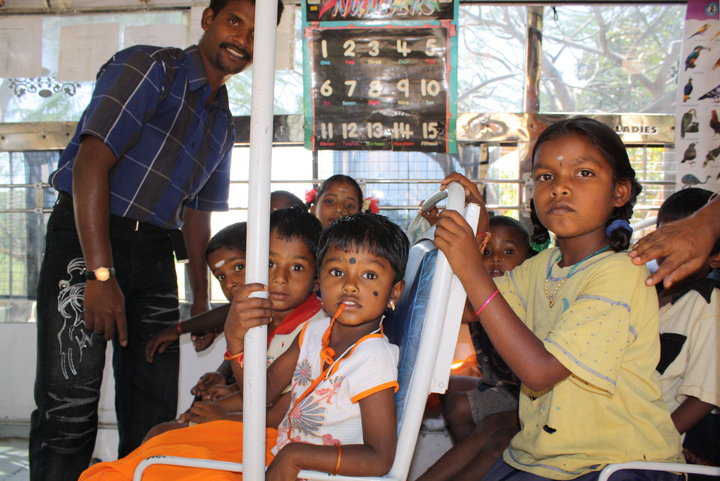
...studie of a stranger who...

...tells something about Ossy Osbourne and...

...is impressed about the result, so that...

...he can distribute the best marks for all the kids...

...what to say? A responsible cut for a man but the opening ceronomy of new Mobile School Bus is done...well done Mr. PeteR...but let...

...the kids out and...

...some more and...

...I enjoyed an amazing day with amazing children and collegues and...

...we all were screaming loud..."Bahoot bahoot dhanyawat Die Toten Hosen se"...

..and I say: "es gibt tausend gute Gruende auf diese Band stolz zu sein und gerade fallen mir...verdammt viele davon ein...

...thank you and good bye to Prem and Tirupur...but what about DAS AUTO ?
India is shinning...not everywhere....
New poverty index finds Indian states worse than Africa
Agence France-Presse
London, July 13, 2010
First Published: 19:06 IST(13/7/2010)
More people are mired in poverty in eight Indian states than in the 26 poorest African countries, according to a new UN-backed measure of poverty. The Multidimensional Poverty Index (MPI) looks beyond income at a wider range of household-level deprivation, including services, which could then be
used to help target development resources. Its findings throw up stark
istics compared to regular poverty measures.
The study found that half of the world's MPI poor people live in South Asia, and just over a quarter in Africa.
There are 421 million MPI poor people in eight Indian states alone -- Bihar, Chhattisgarh, Jharkhand, Madhya Pradesh, Orissa, Rajasthan, Uttar Pradesh, West Bengal -- and 410 million in the 26 poorest African countries combined.
The researchers said that the extent of poverty in India had often been overlooked, by figures comparing percentages of poor people in countries as a whole rather than sheer numbers.
According to the index, 64.5 per cent of people in sub-Saharan Africa are MPI poor. In South Asia, 55 per cent of people are MPI poor. Both figures are higher than the number considered extreme income poor -- living on less than 1.25 dollars per day.
The new index was created by the Oxford Poverty and Human Development Initiative (OPHI) at Oxford University in southern England, and the Human Development Report Office of the United Nations Development Programme (UNDP).
"Our measure identifies the most vulnerable households and groups and enables us to understand exactly which deprivations afflict their lives," said OPHI director Sabina Alkire.
"The new measure can help governments and development agencies wishing to target aid more effectively to those specific communities."
The MPI will be used in the forthcoming 20th anniversary edition of the UNDP Human Development Report. It supplants the Human Poverty Index, which has been used since 1997.
The index takes into account that people living in MPI poverty may not necessarily be income poor: only two-thirds of Niger's people are income poor, whereas 93 per cent are poor by the MPI, it found.
It also showed that "multi-dimensional poverty" varies a lot within countries. In Delhi, 15 per cent of people are MPI poor, compared to 81 per cent in Bihar.
Montag, 28. Juni 2010
A lonely but regular voice from Goa, Wendell Rodricks
We need accountability, collective responsibility
Article from the Goan fashion designer Wendell Rodricks, Times of India, Jun, 26.
Goans can’t continue to run scared of uncertainty. When trust is in place and all Goans are responsible for the collective development of the state, it will lead to progress, says Wendell Rodricks.
Those who say that development is bad for Goa actually mean to say that the change in Goa is at too rapid a pace. It is foolish not to want progressive development.
Who does not want a clinic and a doctor in each village? A playground? A job opportunity? We all do. Goans must comprehend that even progressive development comes at a price. Trees will be cut. Land will be levelled.We must accept that! What people cannot accept are doubts about the intent of the administrators of power, real estate developers, mega project developers and entrepreneurs solely with private gain on their minds.
Goans are educated enough to know about ill intent. They can figure out a kickback commission on a bird-brained project like a sea link. Or an airbus. Or another airport. In a state as small as Goa, there is a genuine concern that in 20 years, the state will be a concrete skeleton. There are far too many homes and spaces left unused or under litigation. At some point we Goans need to decide how much is enough. Since it is almost every Indian’s wish to have a home in Goa, are we going to accommodate one billion people’s dreams? The vast housing projects, on paper and in reality, enjoy one week occupancy of the actual owner per year.Will Goa become a concrete jungle of unused homes?
It will; going by what we see in Calangute, Baga and all over Goa. Empty buildings with three or four families in permanent residence. Certainly, no one has given a thought for basic amenities like water and power for this influx of catastrophic proportions.
Questions are raised accompanied with valid doubts.Who are we building for? Is this building spree not an exploitation of real estate? Where will Goa get the natural and manmade resources to support the population growth? When will this migration end? Should we not control it to a point?
What are also questionable are the comparisons with the rest of India. What works in Gujarat will not work here.And vice versa.Why do we have IT plans when there is no infrastructure and no Goans to man these grand plans? The environment is a big concern. Not just for us humans. What about the silent creatures of the earth? Level a hill for an airport with no concern for the butterflies, the birds, and the wildlife. Are we fair to rob cows of their grazing grounds? Do we dream that our pollution will give us fish in our rivers in ten years? Can we not see that we have placed factories on grazing land and now sacred cows forage in garbage piles? Disgraceful. Disrespect for religious animals as well. Disrespect for our children as they will never see the Goa we enjoyed.
Another consideration is how long Goa will stay flavour of the country and of the world at large. Tourists flocked to the south of France, then Ibiza, later the Algarve, now South America. Goa is the latest trend. But for how long? We should recall that the boom in tourism for Goa began with the LTTE problem in Sri Lanka. It is then that charters shifted to the safer holiday destination Goa so easily became. We must accept that we will be surpassed by Assam or Meghalaya, and other nearby countries on the globe. In a few years it will not be so chic to own a home or apartment in Goa. Fashionable dictates will drive people elsewhere.
What happens then? More concrete skeletons and a cheaper tourist? My greatest fear is that if there is no plan in place,Goa may lose out on its biggest earner—tourism. Goa enjoys a reputation (sullied too often in the recent past) for being a tourist destination. With the excessive development rate, tourism will suffer.
The only solution is to plan for Goa. Install a core group of people who can plan for the state with no personal gain for themselves. We need development in terms of infrastructure, jobs and social welfare. The future of Goa’s financial situation should be long term. Not a shortterm scheme which cannot sustain itself after a mere five years.
One of the lasting impressions of living in the Western world is how politicians and world leaders leave behind a cultural, architectural or social legacy. Mitterrand left behind a great library and a modern Arche de la Defense. Jacqueline Bouvier Kennedy left an airport in her husband’s name. Closer home we associate Pratapsingh Rane with the Kala Academy and Manohar Parrikar for starting IFFI.
The chief minister and his MLAs should discuss a 20-year-plan of future direction and in what condition Goa should be in the next century. One of the problems most Indian states face is the lack of a concrete plan for the future. The planning commission apparently does no planning.
It is simply a body that accepts budget requests from various ministries and passes them onto the Centre (with no input whatsoever). Our needs will change each month. But if things are planned well, it will be an administrative coup. To foolishly imagine that a two-lane highway must become four lanes and then eight lanes and then ten lanes... Is it not wiser to keep the two lanes in place and figure out ways and means to control traffic?
The “shifting of the goal posts” must stop.We need to decide what is the maximum population we can sustain, how much of Goa will be green, the social, cultural and economic future of villages and cities.When one does a study of areas that need planning, one realizes, ironically, that there is a ministry for each concern. Power, health, PWD, environment, culture, education, tourism, home and agriculture.What would be ideal is if each minister is allotted a budget to spend but is held accountable, like in a business enterprise.At the moment, it is all about spending a budget or requesting a budget. How about if the budget is sanctioned and a return with interest stipulated in a set time frame? It is only then that there will be total accountability and not a waste of public money.
In areas where the government has handed out contracts to private sectors, they have enjoyed success for both parties. If the ministries of municipal administration, panchayats, PWD, environment, tourism and the chief minister (who are all affected by the garbage management issue) solicit and grant to a private contractor with a track record for success the task of waste collection, the garbage problem will vanish. There is a lot to be done. And developed. When trust is in place and all Goans are responsible for the collective development of Goa, it will lead to progress.
Who says Goa does not need development? It is the need of the hour!
Samstag, 26. Juni 2010
What the Portuguese could not destroy in 451 years....
Paradise lost, in just 50 years of independence
from TOI Jun 25, 2010,
Many, many years ago, when we were young, we would roam freely in Margao, or ride around the villages to while away our time. The atmosphere was clean, the air we breathed pure, the scenery eye-catching.Open spaces were aplenty, with vast expanses of greenery.
Yet, back home at night,we often exclaimed: “Goa after 9pm looks like a cemetery. If this was Los Angeles or Europe, there would be so much development!” We longed for what we didn’t have. Then came Goa’s liberation and with it, development... a sea of illconceived development in which we are now drowning.
First came the big hoteliers who bought large stretches of our coast from Goans themselves, who were too eager to sell their properties for the attractive sums of money they got. Then came the Delhiwallahs with hard cash and again Goans were only too willing to part with ancestral property and large stretches of land in exchange of short-lived wealth. Some Goenkars migrated, others invested in fixed deposits. Nobody thought of investing in something worthwhile that would keep future generations happy in Goa. Successive governments (MGP, BJP, Congress and the coalitions) rose to power, only to loot and plunder Goa. Soon things got into a fast-forward mode. “Development” monsters came haunting us... IFFI, Regional Plan 2011, SEZs, sports city,Mopa international airport and the Panaji-Vasco sea link. All 40 MLAs keep colluding to make the most of their hidden agendas: “self-development”programmes meant to line their own pockets (with a zero plan for social development).
One classic case of ill-conceived development in Goa is the housing development scheme—otherwise a basic need of humankind. The world over, every government promotes housing schemes to provide more and better housing amenities to its citizens. The average Goan needed some help to improve his living conditions. But he was betrayed. Under the pretext of development, Goan politicians have exploited mega housing to further their nefarious agenda. What’s more, as their abominable tactics help create migrant vote banks, Goans are shown the door. It is not surprising that clearances to such housing projects are being scandalously issued without application of prevailing rules and regulations. The new mantra is: “Construct first, infrastructure later” (which means never). The promise of better infrastructure remains a pipe dream. It is money that rules the roost today. Clandestine deals are struck with huge kickbacks to politicians and their coterie.Moneyed builders from all over the world thrive here on illegalities. They easily manage to get agricultural land, forest areas and land debarred under CRZ regulations “converted”.
Mega projects, where Goans can’t even dream of securing a job or finding a roof over their heads, raise their ugly heads overnight. Every piece of our land is being fraudulently secured by outsiders. Our landscape and demographic balance has tilted radically. What the Portuguese could not destroy in 451 years is being frittered away in less than 50 years of our “independence”. With eyes set on filthy lucre and short term gains, we have lost so much that was precious and dear to us. Like the destruction of our coastline. More than 10% of the 105 kilometre (65 mile) coastline is congested with haphazard, unauthorized “development”... overflowing sewage, water shortage, contaminated groundwater, coastal erosion and congestion. (Perhaps it is not an irony that the previous tourism minister himself had to go underground). Mining pollution continues to play havoc with the environment. In villages, rivers run dry, wells have no water and mining rejects spill over into local fields.What is more frightening is the mafia that has sprung into illegal mining. The last nail in Goa’s coffin is the non-stop land acquisitions under the pretext of development—“land grabs”.
Acquisitions are made for one purpose and later the land is used for entirely different purposes. Goans have woken up to the reality that the sudden mushrooming of slums and concrete buildings in acquired lands has social, cultural and psychological consequences, which may not be evident to the casual observer. The loss of physical, social and cultural characteristics of the Goan identity is a serious matter today. It poses a threat to Goan identity. To the time-honoured traditions and cultural background of the original natives. Our little piece of paradise is being destroyed.Greedy politicians that we ourselves elect time and again permit distorted “development” to be transplanted into Goan soil. Development which kills the soul of a people. Goa does not need the model of development which has proven to be a failure elsewhere.What we need is socially cohesive, sustainable and, above all, a morally sound model of “development”. Wishful thinking? Perhaps. Yet hope springs eternal in the human breast.
Montag, 21. Juni 2010
Green India Mission is not business as usual,
...says Jairam
by Amruta Byatnal, The Hindu, 20th June, 2010
Public consultation in Pune
Pune: “Green India Mission is not business as usual. If that is the case, we will be playing with people's sentiments. This is about improving our mental outlook. It is an opportunity to bring about change,” Union Environment Minister Jairam Ramesh, said at the outset of the third national public consultation of the National Mission for a Green India here on Saturday.
“We will not go into how things have been done in the last 50 years. This is going to be different. We seek to bring about a change in the relationship between the people and the forest department. We will ensure transparency and a system of social audits,” he added.
Having come to the city after their visit to Guwahati and Visakhapatnam, the Minister and the members of the core committee interacted with activists and citizens, sharing suggestions and grievances. The national consultations will be held in four more cities: Dehradun, Bhopal, Jaipur and Mysore, after which a final draft of the Mission will be prepared in August. Organisations and individuals from all over Maharashtra participated, suggesting ways to make the Mission a success.
The Mission is a part of Prime Minister Manmohan Singh's National Action Plan on Climate Change (NAPCC), aiming to increase the forest cover in the country by 10 million hectares by 2020 and enhance eco-system services in a holistic manner.
BMS Rathore, a core group member, laid down the means by which the Environment Ministry sought to achieve the mission: strengthening local community institutions and the capacity of the forest department, improving investment climate for planting and forest conservation and monitoring at outcome levels. A number of propositions were presented to the Minister through the day. Citizens brought up the questions of livelihood security, proper use of funds and the issue of de-greening vs. greening. Vishwambhar Choudhari, of Oasis Environmental Foundation, which is a part of the National Alliance of People's Movement (NAPM), said that although the Mission was concentrating on ‘greening' the country, it should not be forgotten that ‘de-greening' through afforestation is also resulting in a loss of forest cover. “Taking the example of Lavasa City that has cut hundreds of trees and not got any clearance from the Environment Ministry, we should look into such matters before planting more trees,” he added.
Replying to that, Mr. Ramesh said, “We all know how and why Lavasa happened. If there are any mistakes made by the Central government I will rectify them.”
Ecologist Madhav Gadgil suggested that a ‘Community Forest Reserve' should be created and people's participation should be encouraged. Furthermore, from the two lakh villages with forest cover, two crore hectares of land could be used for the Mission. Economist Anita Beninger said that the Mission should aim at integrating the Ministry of Urban Development in the plan. She also suggested the development of local carbon markets that could trade among themselves.
Environmental activist Ashish Kothari stressed that ‘Gram sabhas' should be the deciding authority on the land. “Urban greening and preservation of wetlands is very important. Apart from that, agro forestry should not be carried out on food lands,” he added. On the question of funds, he said that “mechanisms that will make sure that the money is spent where it should be spent and by whom it should be spent” should be put in place
Sampat Kale, a faculty member at the Tata Institute of Social Sciences (TISS), said the mangroves in Maharashtra should be taken care of, as they were being endangered by the Special Economic Zones (SEZs). . Experts and activists took up the cause of the grasslands. Only if they are restored, the Great Indian Bustard can have its habitat back, they said.
Shriram Gamarkar, member of the organisation, Vanrai, said the power of the youth should be used to the fullest.
Responding to queries, Mr. Ramesh said that in three years, three to four forestry satellites would be launched, and this would help monitoring the programmes on a day-to-day basis.
On the land to be forested, citizens said if the Mission were to be advertised as a ‘people's programme,' it should deal with the ownership issue with sensitivity.
Dienstag, 15. Juni 2010
Organic Cotton versus BT cotton
Organic farming gives Indian farmers greater financial security
June 15, 2010
(from: http://www.greenpeace.org/india/press/releases/organic-farming-gives-indian-f )
Hyderabad, India — A Greenpeace report released today said the monetary benefits of organic cotton farming are much greater than using the Genetically Engineered variety that makes farmers more vulnerable to financial collapse due to high debts and increased costs of cultivation. The report titled “Picking Cotton - The choice between organic and genetically-engineered cotton for farmers in South India’ shows that in the year 2009-10 farmers cultivating cotton through organic practices earned 200% more net income than farmers who grew Genetically Engineered cotton [Bt cotton].
The Greenpeace report is a comparative analysis of two methods of agriculture among cotton farmers in Andhra Pradesh. It not only shows the economic benefit of ecological farming (in this case organic) but also that Genetically Engineered (GE) cotton, despite using many toxic pesticides, still has greater crop loss to pests.
“Our study illustrates how farmers growing GE cotton face high debts and high costs of cultivation, becoming more vulnerable to financial collapses”, said Dr Reyes Tirado, Scientist, Greenpeace International, who authored the report.
Bt cotton1 farmers not only use 26 different pesticides, including pesticides targeting pests that the GE cotton is supposed to control, but also lose financially due to their higher input costs.
In the region of Andhra Pradesh the cost of cultivation is much higher for Bt cotton farmers. The Bt cotton farmers incurred 65% higher debt –accumulated during 2008/09 and 2009/10– than the non-Bt organic cotton farmers.
The farmer distress in the state had lead to the central government announcing a 5 year relief package for farmers amounting to 20,000 crores in the year 2008.
“It is preposterous that on the one hand government dolls out thousands of crores in the name of bringing relief to farmers while on the other they permit and promote Bt cotton cultivation and ensure that the farmer can never escape the debt treadmill.” said Dr G.V Ramanjaneyalu, Executive Director of Centre for Sustainable Agriculture who was present at the report release.
The controversies around Bt cotton have finally forced the Genetic Engineering Approval Committee, the agency responsible for the commercial release of GE crops in the country, to do a review of its performance since 2002, the year it was released.
“Bt cotton has only benefitted the multinational seed giants like Monsanto who has earned 1580 crore Rupees as royalty from its patented Bt cotton seed since its release” [1] said Rajesh Krishnan, sustainable agriculture campaigner with Greenpeace India. He concluded that “Cotton farming that uses ecological practices and avoids genetically engineered seeds and agrochemicals is the most beneficial for Indian farmers”,
Greenpeace is demanding that the Indian government bans Bt cotton cultivation, takes an active role in supplying sufficient quantity and quality of non-Bt seeds and supports organic and ecological cotton farming.
Abonnieren
Posts (Atom)
